
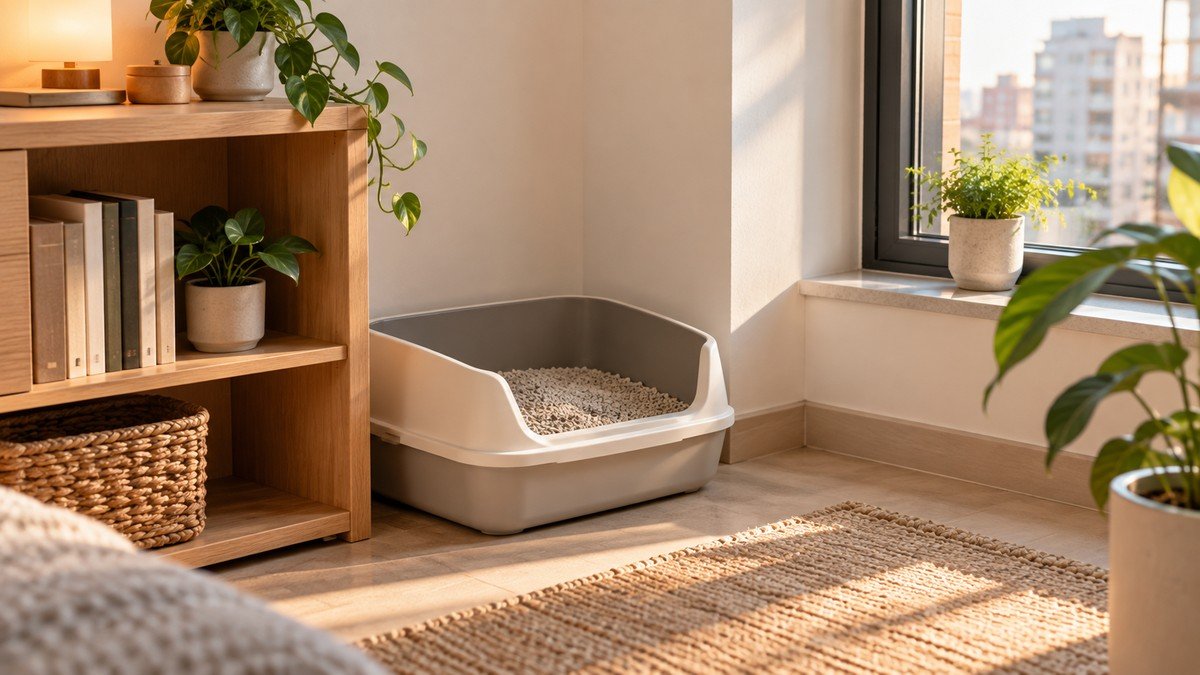
If you’ve ever shopped for a litter box, you already know the problem isn’t a shortage of options — it’s that almost none of them are marketed with the one measurement that actually predicts whether your cat will use it. Color, price, and “modern design” are everywhere. Interior dimensions next to your cat’s actual size are almost never front and center, and in a small apartment, where every box competes with floor space you don’t have to spare, that’s exactly backwards.
This guide walks through what veterinary and animal-behavior organizations actually say determines whether a litter box works, translates that into the box types you’ll find while shopping, and looks at where specific Petmate products line up against that guidance. We’re not testing these products ourselves or claiming firsthand performance — everything below is manufacturer-published specifications and veterinary guidance, clearly separated.
Affiliate disclosure: As an Amazon Associate I earn from qualifying purchases. Some links in this guide are Amazon affiliate links, which means PawSpace Living may earn a commission if you buy through them, at no additional cost to you. Our comparisons are based on published guidance and manufacturer specifications, not our own testing. Read our full Affiliate Disclosure.
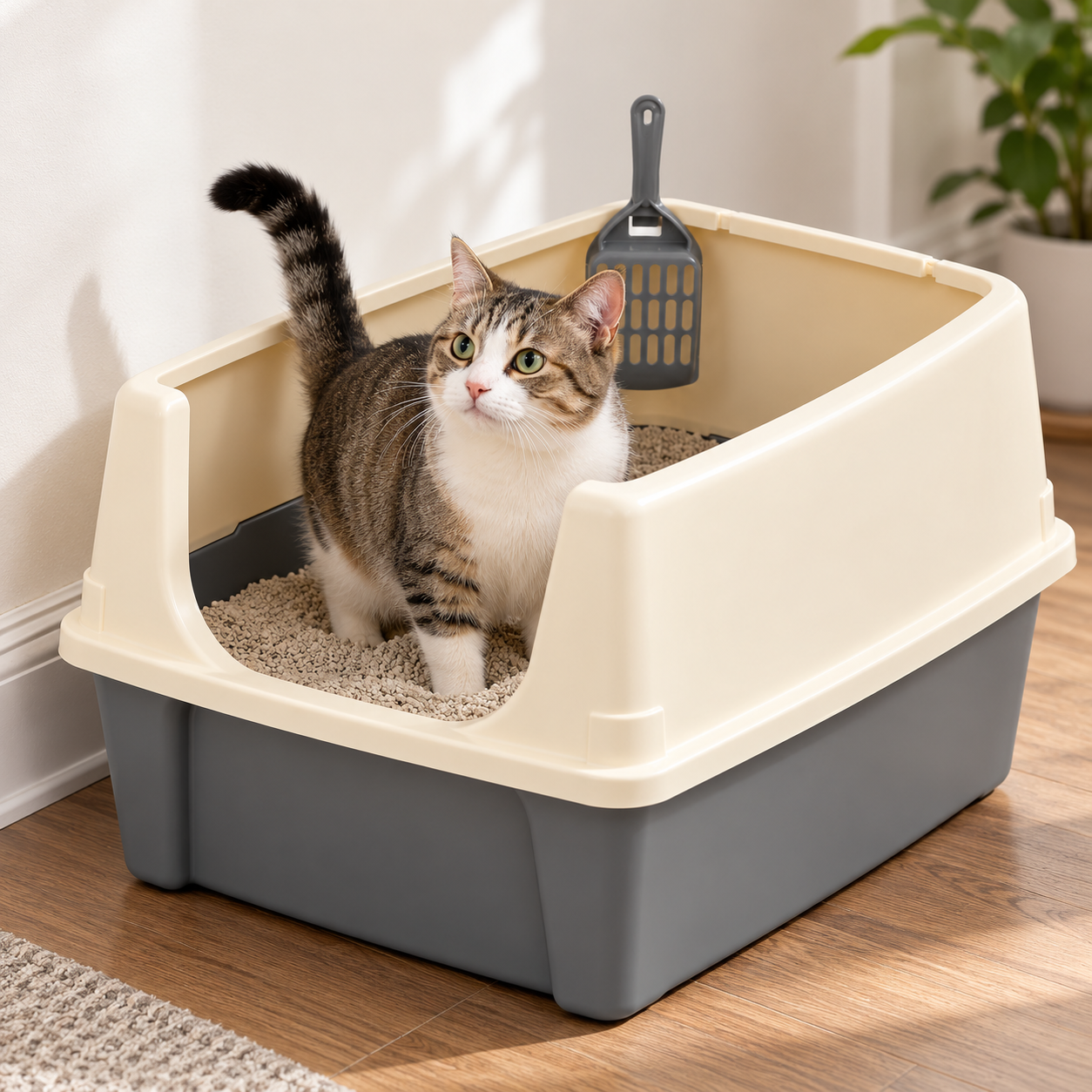
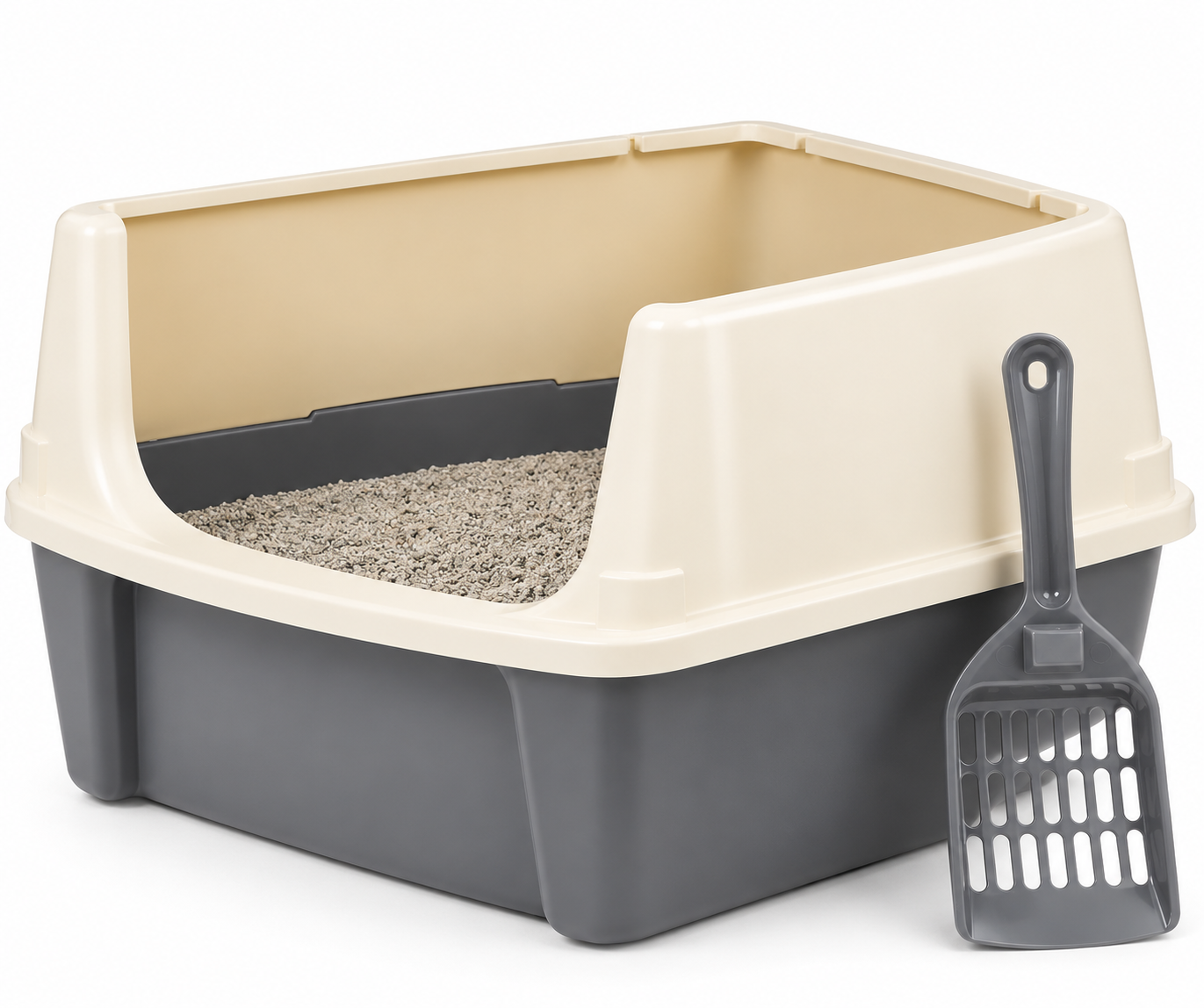
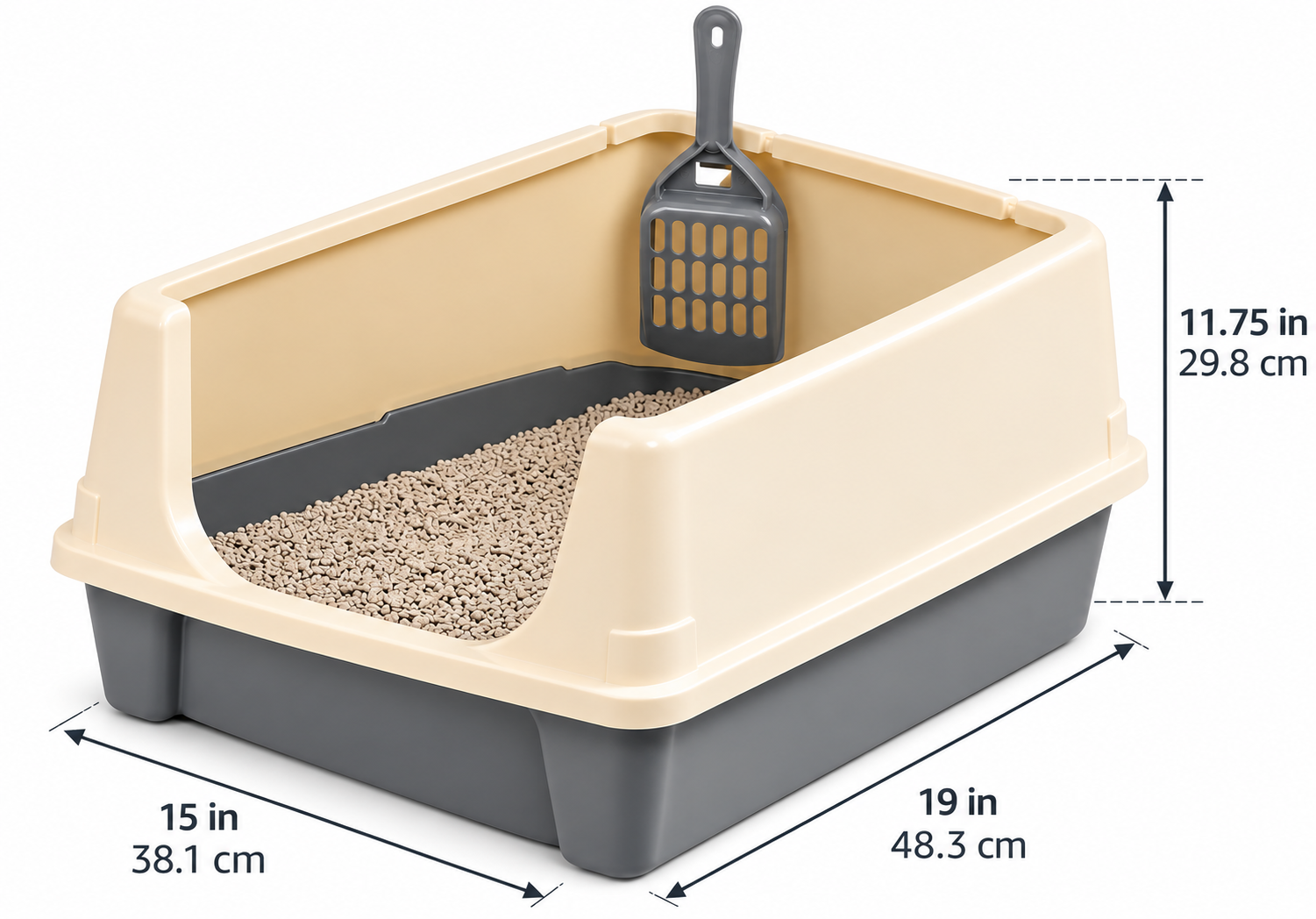
AI-generated illustrations, not the actual product photo; the real product may look different.
Product pick
Amazon Basics Large Cat Litter Box, Open Top
An open-top pan with higher sides, listed at 19 x 15 x 11.75 inches. Compare the dimensions with your cat’s length and your floor space before you buy; we have not tested this product.
Affiliate link: we may earn a commission at no extra cost to you.
What Specific Litter Boxes Actually Offer (Manufacturer Specs)
The following is what Petmate publishes on its own product pages as of this guide’s research date — not our own testing, and not a claim about how any specific cat will respond. We’re including Petmate here because it’s a widely available, mainstream litter box brand with a broad size range and, notably, the manufacturer’s own published specs make it straightforward to check sizing against the AAHA/AAFP guidance above — which is exactly the kind of transparency this guide is trying to encourage.
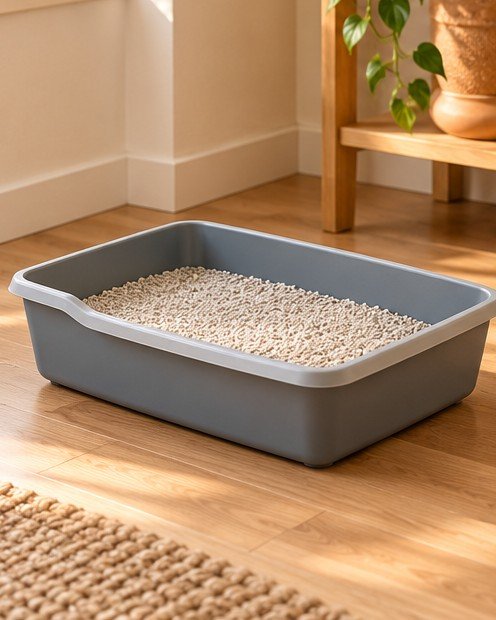
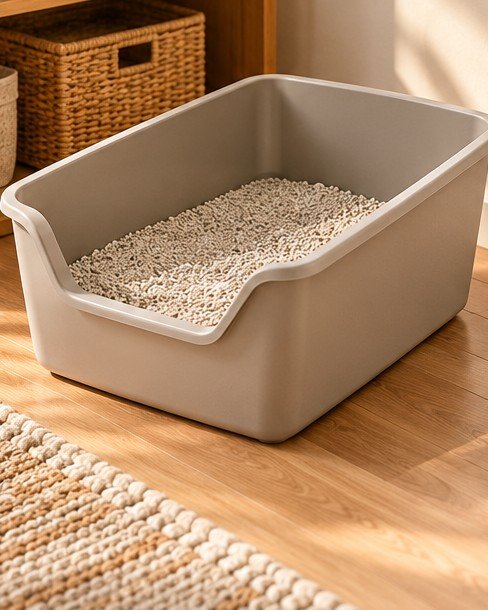
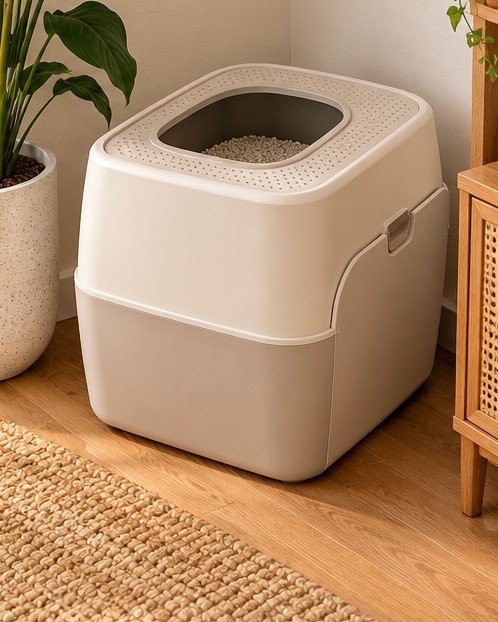
| Product | Type | Dimensions | Material / notable claims |
|---|---|---|---|
| Petmate Basic Litter Box (Jumbo size) | Open pan | 22.05″L x 16.55″W x 6.5″H | EcoTech resin (90% post-industrial recycled material); made in the USA; low rimmed sides for easy entry/exit |
| Petmate Giant Litter Box | Open pan, oversized | 25.56″L x 18.3″W x 10.02″H | 95% pre-consumer recycled plastic; higher sides than the Basic line to contain scatter; sloped entry; made with Microban; holds over 30 lbs of litter |
| Petmate Top Entry Litter Box | Top-entry, enclosed | 20.29″L x 15.07″W x 15.20″H (lid opening 8.75″ x 9.75″ per Petmate’s image text; Petmate’s page also lists 15″ x 15″ x 20″, so confirm before buying) | 95% pre-consumer recycled materials, per Petmate’s product page; textured non-slip lid; side-opening lid for cleaning access; built-in scoop hook |
Where to buy: if you want a standard open pan with higher sides, one in-stock option on Amazon is the Amazon Basics Large Cat Litter Box, Open Top (affiliate link), listed at 19 x 15 x 11.75 inches. Compare the dimensions on the listing with your cat’s length and your floor space before you buy; we have not tested this product.
A few things worth pointing out about how these line up with the size guidance above: the Giant Litter Box’s 25.56-inch interior length is long enough to meet the “1.5x nose-to-tail length” standard for most adult cats, which the smaller Basic sizes and even the Top Entry model’s 20.29-inch length may not be, depending on your specific cat’s measurements. If you have a larger cat, or simply want margin above the guideline rather than right at it, that’s the kind of comparison worth making against your own cat’s measurement rather than a size label like “large” or “jumbo,” which aren’t standardized across brands.
All three Petmate products carry the same manufacturer guidance: replace the box roughly every 12 months, because — in Petmate’s own words — “odors can penetrate plastic and resins” over time in a way that washing doesn’t fully reverse. That’s a useful budgeting note for a small apartment specifically, since a worn box is a smell source you can’t clean your way out of no matter how diligent your scooping schedule is.
Size Is the Setting Most People Get Wrong
The single clearest, most specific guidance on litter box size comes from the American Animal Hospital Association and American Association of Feline Practitioners’ 2021 Feline Life Stage Guidelines. Their recommendation: the litter box should be “at least one and a half times in size based on the length of the cat from nose to tip of the tail.” The same guidelines flag that most commercially available litter boxes fall short of that standard — which means the “standard size” box on a store shelf is often undersized for an average adult cat, not just for large breeds.
In practice, that means measuring your own cat nose-to-tail before you shop, rather than trusting a box labeled “large” to actually be large enough. A cat that measures 18 inches nose to tail needs roughly 27 inches of interior box length to meet the guideline — longer than most boxes marketed as standard or even large-sized.
Why this matters more in a small apartment specifically: the instinct when space is tight is to size down, buying the smallest box that fits the available corner. The AAHA/AAFP guidelines are direct that an undersized box is a documented reason cats avoid using it — so a box that fits your space but not your cat can end up costing you the floor space anyway, just with added cleanup.
Open, Covered, or Top-Entry: What the Guidance Actually Says
The AAHA/AAFP guidelines note that whether a box is open or covered “may also be important to some cats” — they don’t recommend one universally over the other, because cat preference varies. That’s a more nuanced answer than most buying guides give, so it’s worth breaking down what each style actually trades off:
Open pans. The simplest option, and generally the safest default if you don’t know your cat’s preference. No enclosed space, no reduced visibility, nothing trapping odor inside a chamber. The tradeoff is that an open pan puts the smell directly into your room instead of containing it, and it has the least effective litter-scatter control of the three types.
Covered/hooded boxes. These physically contain scatter and hide the visual of the box, which sounds appealing in a studio or one-bedroom. The tradeoff, per veterinary guidance broadly and reflected in Article 8’s coverage of this same question, is that hoods trap odor inside the box rather than eliminating it — meaning you get a concentrated smell each time the lid comes off rather than a lower ambient smell overall — and some cats are hesitant to enter an enclosed space where they can’t see what’s approaching.
Top-entry boxes. A specific enclosed design where the cat enters through an opening in the lid rather than the side. These are effective at scatter control since litter has to fall back through the opening rather than out a side door, and they’re often marketed as multi-pet-household friendly since the opening size can exclude dogs. The tradeoff is accessibility: jumping up and into a top opening is harder for kittens, senior cats, or any cat with joint pain than stepping into an open pan, so this style is worth reconsidering if your cat is very young, older, or has any mobility limitation.
None of these is a “best” choice in the abstract — the right one depends on your cat’s own preference and any mobility considerations, which is exactly what the guidelines say. If you’re not sure which your cat prefers, starting with an open pan and only moving to a covered or top-entry style if scatter or smell becomes a real problem is the lower-risk order to try them in, since it’s easier to add a cover than to convince a hesitant cat to start using one.
Material and Odor: Why Replacement Matters More Than Deep Cleaning
This is a detail that’s easy to miss because it isn’t intuitive: a litter box that’s washed regularly can still be the source of a lingering smell, because plastic and resin surfaces absorb odor at a microscopic level that surface cleaning doesn’t remove. This is the manufacturer’s own stated reason for its 12-month replacement recommendation, and it lines up with the general veterinary guidance on litter box hygiene — daily scooping and weekly washing keep a box usable, but they don’t reset an aging box’s odor absorption the way a full replacement does.
In a small apartment, this matters more than it would in a larger home, because there’s no hallway or basement to buffer a box’s smell from your living space — it’s usually in the same room, or close to it, as where you spend most of your time. Budgeting for an annual replacement, rather than treating a litter box as a one-time purchase, is a small but real part of keeping a small space livable.
Where to Actually Put It Once You’ve Chosen
Choosing the right box only solves half the problem — placement is the other half, and it’s a bigger factor in a studio or one-bedroom than the box itself. We’ve covered this in detail separately: our guide on how many litter boxes you actually need in a small apartment (and where to put them) walks through the one-per-cat-plus-one rule, realistic apartment-specific spots that satisfy veterinary placement guidance, and what to do in multi-level units. If you’re choosing a box for the first time, it’s worth reading both guides together rather than optimizing the box without a plan for where it goes.
If You’re Already Dealing With Litter Box Odor
A new or better-sized box helps going forward, but it won’t undo odor that’s already set into flooring, especially if you’re a renter approaching a move-out inspection. If that’s the situation you’re in right now, our guide on how to remove pet odor before moving out of a rental covers the identification and treatment process in more depth, including why common household products often fail on pet odor specifically.
FAQ
Is a bigger litter box always better?
Bigger is better up to the point of meeting the 1.5x nose-to-tail guideline — after that, the benefit levels off and the tradeoff becomes floor space and how much litter you need to fill it. The goal is meeting or slightly exceeding your specific cat’s measurement, not maximizing size for its own sake.
Should I get a covered box to control smell in a small space?
Not automatically. A cover contains scatter and hides the box visually, but veterinary guidance is clear that covers trap odor inside rather than reducing it — you may notice less ambient smell but a stronger burst when you open the lid. If odor control is your main goal, more frequent scooping and eventual box replacement address the actual cause more directly than a cover does.
Are top-entry boxes safe for older cats?
Worth reconsidering if your cat has any mobility limitation. The entry requires jumping up and into an opening, which is a higher physical demand than stepping into a low-sided open pan. If your cat is a senior, a kitten, or has joint issues, an open pan with low sides is the more accessible choice regardless of how much you like a top-entry box’s scatter control.
How often does a litter box actually need to be replaced?
Manufacturer guidance (Petmate, in this case) recommends roughly every 12 months, based on odor absorption into the plastic itself rather than visible wear. This is separate from — and in addition to — daily scooping and weekly washing, which keep a box usable but don’t reset that underlying odor absorption.
If scattered litter is your main problem, read how to stop litter tracking in a small apartment.
A Note From PawSpace Living
This guide reflects the AAHA/AAFP 2021 Feline Life Stage Guidelines and manufacturer-published specifications current as of this article’s research date. We have not personally tested the products referenced here, and nothing above should be read as a personal performance claim or review — it’s a comparison of published guidance against published specs, meant to help you shop with the right measurement in hand. Individual cats vary, and your own cat’s preferences (and measurements) are the real deciding factor.