
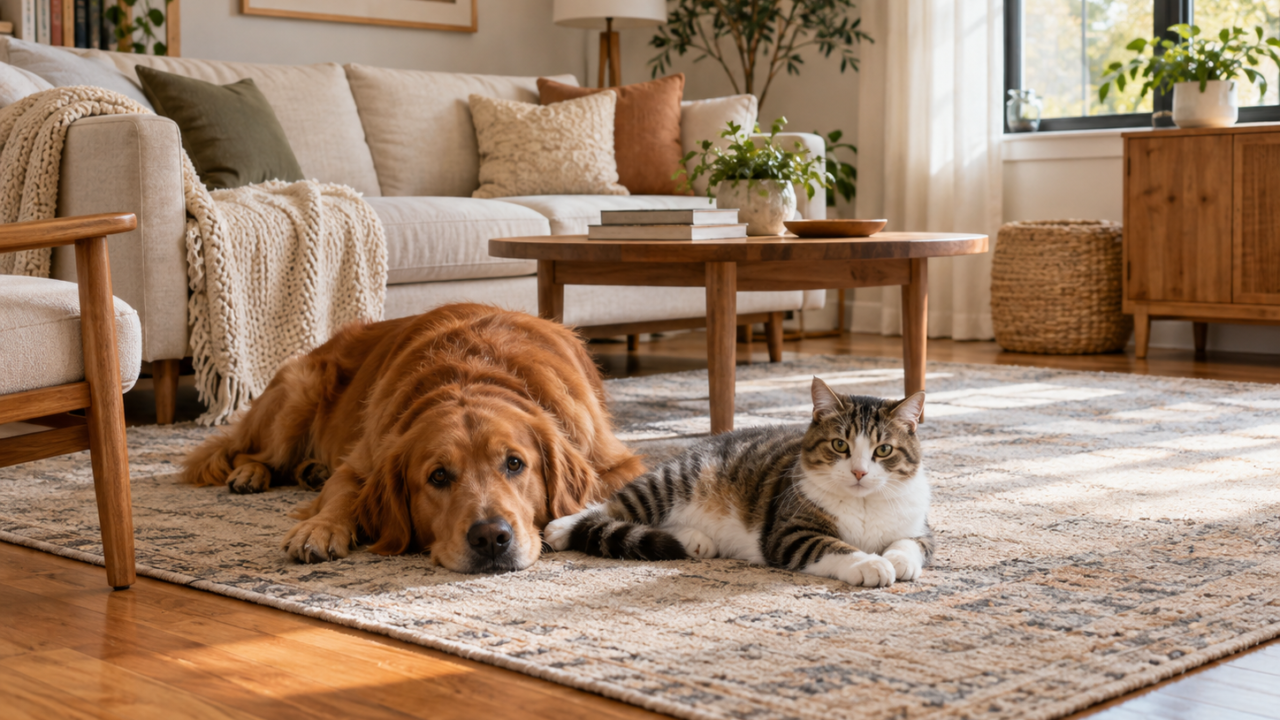
Pet odor has a way of hiding until it doesn’t. You live with your dog or cat every day, so your nose adjusts long before a friend, a landlord, or a new tenant would notice anything. Then move-out gets closer, and suddenly you’re wondering what’s actually in that carpet, and whether it’s too late to do something about it.
The good news is that odor removal isn’t really about finding one powerful product. It’s about finding where the smell is actually coming from and treating that source directly, instead of covering it up with something that smells stronger for a few hours. This guide walks through the most common sources of pet odor in a rental, what reliable sources say actually helps, and a few combinations you should never try, no matter how tempting a “double strength” clean feels a few days before you hand back the keys.
One thing this guide won’t do is promise a specific outcome with your landlord or your security deposit. Whether a charge is fair depends on your lease and the laws that apply where you live, not on which cleaning method you used. What follows is general cleaning guidance, not legal advice.
Affiliate disclosure: As an Amazon Associate I earn from qualifying purchases. Read our full Affiliate Disclosure.
Product pick
Nature’s Miracle Cat Stain and Odor Remover
A widely sold cat-specific enzymatic spray. Follow the label, and spot-test a hidden area before treating carpet or flooring you are responsible for. We have not tested it.
Where Pet Odor Actually Comes From
Before buying anything, it helps to think about where odor actually collects in a home with a pet. It’s rarely just one thing. The litter box produces ammonia-heavy smells if it isn’t scooped often enough. Bedding, rugs, and upholstery absorb oils, dander, and the occasional accident. Urine that reaches a hard floor can work its way into the finish or the seams between boards. And the air itself can hold onto odor if a space doesn’t get much fresh air moving through it.
The Environmental Protection Agency’s general guidance on indoor air treats this as a hierarchy: the most effective step is removing the source of a pollutant or odor, ventilation comes next, and air filtration is a supplement to those two steps rather than a replacement for them. That’s a useful way to think about pet odor specifically. An air purifier or a scented spray can make a room smell better for a while, but if the actual source, whether that’s a litter box, a rug, or a section of carpet, hasn’t been addressed, the smell tends to come back.
With that in mind, it makes sense to work through each source one at a time.
Pet Bedding and Washable Fabrics
Bedding is one of the easier sources to manage, mostly because it’s designed to be washed. A regular routine matters more than any specific product: washing pet bedding weekly, rather than letting weeks or months pass, keeps oils and dander from building up to the point where they’re hard to remove. It’s also worth vacuuming or lint-rolling loose hair and debris off bedding before it goes into the machine, since a heavy layer of hair can interfere with how well detergent reaches the fabric.
Washing in hot water with a pet-safe detergent is the standard recommendation. To help disinfect, a splash of white vinegar can be added to the wash; separately, a one-pound box of baking soda added alongside your regular detergent is another commonly suggested option for odor. If a favorite bed or blanket has more persistent odor that a normal wash doesn’t fully clear, an enzymatic cleaner made for pet odor, used according to its label, is generally recommended over a heavily scented product that just masks the smell.
Drying matters just as much as washing. Bedding that doesn’t dry all the way through can develop a mildew smell that’s arguably worse than what you started with, so either run a full dry cycle or make sure air-dried items are genuinely dry, not just dry on the surface, before they go back into use.
Carpet and Upholstery
Carpet is where a lot of rental deposits live or die, so it’s worth being careful here. If you’re dealing with a fresh accident, the first move is to blot, not rub, using plain white paper towels rather than a colored or patterned towel that could transfer dye into the carpet. The Carpet and Rug Institute, an industry technical body, recommends a mild cleaning solution of about a quarter teaspoon of clear, non-bleach dishwashing liquid per cup of lukewarm water, applied and blotted repeatedly, followed by a plain water rinse and blotting. Automatic dishwasher detergent, laundry detergent, and anything containing bleach are specifically called out as things to avoid on a carpet stain.
Here’s where it gets a little less tidy: sources don’t fully agree on vinegar. The Carpet and Rug Institute’s own stain-removal method includes a step where you apply a diluted white vinegar solution as part of the rinse process. The Humane Society, on the other hand, advises against using vinegar or ammonia-based cleaners directly on a urine spot, out of concern that the lingering scent could actually encourage a pet to remark the same area. Both of these are reasonable, credible positions, and they don’t fully agree with each other. Rather than pick a side for you, the practical approach is this: if you use a vinegar step as part of a carpet-specific stain-removal process, rinse it out completely and let the area dry fully rather than leaving a vinegar scent behind, and if you’re mainly worried about repeat marking in a spot your pet already favors, you may want to skip the vinegar rinse for that particular area.
For odor specifically, rather than just staining, the Carpet and Rug Institute notes that enzyme-based treatments are generally recommended over products that simply cover up the smell, since any urine residue left behind in the carpet backing or pad can resurface as odor later, especially in humid weather. Older, set-in stains are also worth being realistic about: depending on how long a stain sat and what it reacted with in the carpet dye and fibers, some staining can be effectively permanent no matter what you try. If a stain has been there for months, don’t assume any product will fully reverse it.
One more note on method: the Humane Society specifically warns against using a steam cleaner on a pet urine stain, because the heat can permanently set both the stain and the odor into the carpet rather than lifting it out. If you’re renting a carpet cleaner before move-out, this is worth checking on the machine’s settings before you start.
Hard Floors
If your rental has hardwood or a similar hard floor, the approach is different, and the guidance is more limited than it is for carpet. According to Bruce, a hardwood flooring manufacturer, the first step with a fresh accident is the same instinct as carpet: blot and soak up the liquid quickly, then follow with a dry towel, since standing water can warp wood over time. Baking soda sprinkled on the spot can help absorb moisture and reduce odor; left overnight and vacuumed up the next day, it’s a low-risk first step.
For a lingering smell, the flooring manufacturer suggests trying a mix of 3% hydrogen peroxide with a small amount of dish soap, but it comes with a real caveat directly from that same manufacturer: hydrogen peroxide can lighten the color of a wood floor’s finish. On a floor you don’t own, that’s a meaningful risk, not just a cosmetic footnote, so if you try this at all, test it in a hidden spot first, like inside a closet, and give it time to show any change before treating a visible area.
Here’s an important gap worth being upfront about: this guidance comes from a hardwood flooring manufacturer, and reliable manufacturer guidance specifically about pet urine on laminate flooring wasn’t something we could find. Laminate and hardwood don’t always behave the same way, particularly at the seams between planks and with how sensitive the surface finish is to certain chemicals. If your rental has laminate, don’t assume hardwood advice transfers directly. Look for care instructions from the flooring’s actual manufacturer if you can identify it, or ask your landlord or property manager what the flooring is and how it’s meant to be cleaned, before using anything beyond plain water and a mild, non-abrasive cleaner. For more on floor-by-floor care, see our guide on protecting rental floors from pet scratches.
Litter-Box Area
A litter box that’s cleaned regularly is one of the more controllable odor sources in a home, and it’s worth getting right well before move-out, not just in the final week. The ASPCA’s general guidance is to scoop at least once a day, and to rinse each box out completely once a week with baking soda or unscented soap. The ASPCA also recommends keeping litter shallow, around one to two inches, rather than three to four inches.
For households with more than one cat, the ASPCA’s rule of thumb is one litter box per cat, plus one additional box. Where the box is placed matters for odor as much as for your cat’s willingness to use it consistently: a well-ventilated spot that isn’t crammed into a closet or corner tends to work better than a tightly enclosed one. As with carpet, strong-smelling chemical cleaners like ammonia or vinegar aren’t the best choice directly on or near the box, since the Humane Society notes a strong chemical scent can encourage a cat to remark the same spot; an enzymatic cleaner designed for pet messes is the more commonly recommended option for the box and the surrounding floor.
Right before move-out, this is also a good area to check underneath and behind, not just the box itself. A box that’s been in the same spot for a while can leave a ring or a stain on the floor beneath it that’s easy to miss until you move the box for the last time. If you’re also dealing with broader pet-proofing questions around the apartment, our guide on preventing pet damage in a rental covers gear organization and gates in more depth.
Ventilation and Air Cleaning
It’s tempting to treat an air purifier or a few open windows as the main fix, but the EPA’s own framework is clear that ventilation and filtration work best as a supplement to actually removing the odor source, not as a substitute for it. The EPA specifically notes, in the context of mold odor, that an air cleaner can help reduce smell without solving the underlying moisture problem causing it. The same logic applies here: running a purifier in a room with an untreated carpet stain will thin out the smell in the air without addressing what’s actually in the carpet pad.
That said, ventilation is still a genuinely useful last step. Once you’ve treated bedding, carpet, hard floors, and the litter-box area, opening windows for cross-ventilation and, if you have one, running a portable air purifier with an activated carbon filter, can help clear out any lingering odor in the air itself. Think of this as the finishing step after the source-level cleaning, not the first thing you try.
What Enzyme Cleaners Are Designed to Do
Enzyme cleaners come up throughout this guide, so it’s worth explaining what they’re actually meant to do, without overstating it. According to Nature’s Miracle, a leading enzymatic pet-cleaner brand, the enzymes work by breaking down organic waste, and the Humane Society similarly describes enzymatic cleaners as products that break down pet waste odors rather than simply mask them. Nature’s Miracle’s own FAQ also notes that the scent from an enzyme cleaner is often most noticeable right when it’s applied, since that’s when the enzymes are actively breaking down the waste, and it fades as that process finishes, rather than disappearing the instant you spray.
Beyond that general description, manufacturer information doesn’t go into detail about exactly which enzymes are doing the work or which specific compounds they target, so we won’t guess at that either. What’s consistent across sources is the basic distinction that matters for a renter: an enzyme-based product is generally positioned as working on the actual source of the odor, while a product that’s mostly fragrance is working on how the room smells in the moment. For a move-out clean where you want the odor gone, not just covered, that distinction is the useful takeaway.
If you want a starting point, our comparison of three enzymatic cleaners lays out each manufacturer’s stated surfaces and wait times. One widely sold cat-specific option is the Nature’s Miracle Cat Stain and Odor Remover, an enzymatic spray. Follow the label, and spot-test a hidden area before treating carpet or flooring you are responsible for. As an Amazon Associate I earn from qualifying purchases. See our affiliate disclosure. We have not tested it.
Cleaning Combinations to Avoid
This is worth being direct about, because it’s a real safety issue, not just a cleaning tip. Never mix bleach with ammonia, and never mix bleach with an acid, which includes ordinary white vinegar.
Bleach and ammonia combine to produce toxic chloramine gases, and exposure can cause coughing, watery eyes, throat and chest irritation, and in more serious cases, breathing difficulty. Bleach and an acid like vinegar release chlorine gas, which reacts with moisture and can cause similar irritation at lower exposure and more serious respiratory symptoms at higher exposure, according to guidance from a state public health department. This matters specifically for this kind of cleaning because vinegar and ammonia both show up in pet-odor advice, including in this guide. The safest approach is to never combine cleaning products, and to stick with a single cleaning method on any one area rather than layering products to try to clean “more thoroughly.” Always follow the instructions on the product label, and if you’re not sure what was used on a surface before, don’t add a bleach-based product to it — choose a different method instead.
Renter-Safe Move-Out Cleaning Checklist
There isn’t a dedicated, authoritative guide specifically about pet-related move-out cleaning, so this checklist pulls together the source-by-source guidance above into one practical list for the days before you hand back the keys.
- Wash all pet bedding on a hot cycle and make sure everything is fully dry before it goes back into use.
- Treat any carpet or upholstery stains using a mild, non-bleach solution, and if you’re renting a cleaning machine, check that it isn’t a steam setting for a urine stain.
- Test any hard-floor treatment, especially anything containing hydrogen peroxide, in a hidden spot first, and confirm what type of flooring you actually have before assuming hardwood advice applies.
- Give the litter box, and the floor underneath it, a final deep clean, and check for any ring or stain left behind once you move it.
- Air out the apartment with open windows over the final days, and run an air purifier if you have one, as a last step rather than a first one.
- Never combine bleach with vinegar or ammonia-based products — stick to one cleaning method per area and follow the product label.
- Photograph the apartment once cleaning is done, the same way you’d photograph move-in condition, so you have a record of the condition you’re leaving behind.
FAQ
Will cleaning guarantee I get my full security deposit back?
No. What counts as normal wear versus damage depends on your lease and the landlord-tenant laws where you live. Thorough cleaning reduces the chance of a dispute, but it isn’t a guarantee.
Should I use vinegar on a urine stain?
Sources disagree here. Some cleaning guidance includes a vinegar rinse as part of a carpet stain-removal process, while other pet-care guidance advises against leaving a vinegar or ammonia scent behind, out of concern that it could encourage a pet to remark the spot. If you do use vinegar, rinse it out fully and let the area dry.
Can I use the same method on laminate that works on hardwood?
Not necessarily. Reliable manufacturer guidance for pet urine specifically on laminate is limited, and laminate doesn’t always behave like hardwood, especially at the seams. Check your specific flooring’s care instructions, or ask your landlord, before treating a laminate floor with anything beyond a mild cleaner.
Is it safe to use bleach after cleaning with vinegar or an enzyme spray?
The safest approach is not to layer products at all — use one cleaning method per area rather than switching to bleach after a vinegar- or ammonia-based step. Never combine bleach with vinegar or ammonia directly, since the combination can release irritating or toxic gases.
Do air purifiers get rid of pet odor?
They can help with lingering smell in the air, but they work best as a supplement after you’ve cleaned the actual source, not as a replacement for cleaning bedding, carpet, or the litter-box area.
Pet hair is part of a move-out clean too. See a simple routine for pet hair on couches and clothes.
A Note From PawSpace Living
We put this guide together to help renters think clearly about pet odor before a move-out inspection, using guidance from animal-welfare organizations, a flooring manufacturer, an industry carpet-care body, a government health agency, and a pet-cleaning product manufacturer’s own information. We have not personally tested the products or cleaning methods mentioned here, and product performance can vary by home, flooring type, and how long an odor has been present. Always check the current instructions on any product you use, and test anything new in a small, hidden area first, especially on a floor or carpet you don’t own.
This article is for general informational purposes only and is not legal, veterinary, or professional cleaning advice. For questions about your security deposit or lease terms, check your lease and the landlord-tenant laws that apply where you live.
Sources & Further Reading
- ASPCA — Litter Box Problems
- ASPCA Pet Health Insurance — Spring Cleaning With Pets
- HumaneWorld (Humane Society of the United States) — How to Remove Pet Stains and Odors
- Carpet and Rug Institute — Technical Bulletin: Pet Urine and Carpet
- Bruce Hardwood Flooring — How to Get Pee Smell Out of Hardwood Floors
- U.S. Environmental Protection Agency — Guide to Air Cleaners in the Home
- Nature’s Miracle — Frequently Asked Questions
- Washington State Department of Health — Dangers of Mixing Bleach With Other Cleaners